 September 15 is the Feast of Our Lady of Sorrows
Pray: Novena to Our Lady of Sorrows
About this day, Abbot Prosper Guéranger comments how Our Lady, whom
God predestined to be the Mother of His Son, was united in her person to
the life, mysteries and suffering of Jesus, so that she might be a
faithful cooperator in the work of Redemption.
He notes that God
must consider suffering to be a great good since He gave so much
suffering to His Son, Whom He loved so much. And since, after His Son,
God loved the Holy Virgin more than any other creature, He also wanted
to give her suffering as the richest of all presents.
In the solemnity of this feast, we principally remember Mary on
Calvary where she suffered the supreme sorrow of all sorrows that filled
her life. Indeed, so great was Mary's grief on Calvary that, had it
been divided among all creatures capable of suffering, it would have
caused them all to die instantly.

If
the Church limits the number of sorrows to seven, it is because this
number has always symbolized the idea of totality and universality. To
understand the extent and suffering of Our Lady, one must know the
extent of her love for Jesus. Her love as Mother of God only augmented
her suffering. In fact, nature and grace came together to produce
profound impressions on the heart of Mary. Nothing is stronger and more
pressing than the love that nature gives a mother for her son or that
grace gives for God.
These considerations help us understand the
role of suffering in our lives. We see we are not alone in our
suffering. In fact, the immensity of the crosses suffered by Our Lady
was so great that we might also say she suffered not seven, but all
sorrows. She is Our Lady of All Sorrows since no one suffered more.
While it is true that all generations will call her blessed, to a
lesser but immensely real degree, all generations may also call her
"sorrowful."
Thus, we need to understand better that when sorrow enters our lives,
it is a proof of God's love. And when we are not visited with sorrow,
we do not have all the proofs of God's love for us.
It is in sorrow that our mettle is tested. Moreover, one finds a note
of maturity, stability and rationality in those who suffer and who
suffer much. And so we should understand that when adversity,
difficulties, misunderstandings, bad health and conflicts visit us, we
must not see them as things that should never happen. To suffer is
normal in this vale of tears.
If she, whom God loves so much,
suffered, how much more should we suffer. He, who God and Our Lady love,
suffers because God will not refuse to give him that which He gave
abundantly to the two who He loved most: Our Lord Jesus Christ and Our
Lady.
Thus, we must see temptations, trials, stress and so many
other sufferings as something normal in life. We must ask that
sufferings pass but when they persist, we must bless God and Our Lady.
Petitions to the Sorrowful Heart of Mary
The Seven Dolors of the Mother of God
V. Incline unto my aid, O God!
R. O Lord, make haste to help me!
One Glory be.
1. I compassionate thee, O sorrowful Mother Mary, on
account of that grief suffered by thy tender heart at the prophecy of
the aged Holy Simeon. O dearest Mother, through this thy afflicted
heart, implore for me the virtue of humility and the Gift of the Fear of
God.
One Hail Mary.2. I compassionate
thee, O sorrowful Mother Mary, on account of those distressing fears
which thy affectionate heart endured on the flight to Egypt and during
thy sojourn there. O dearest Mother, through this thy anxious heart
implore for me the virtue of generosity, particularly for the poor, and
the Gift of Piety.
One Hail Mary.3. I
compassionate thee, O sorrowful Mother Mary, on account of that anxiety
which thy worried heart endured in the loss of thy beloved Child Jesus. O
dearest Mother, through this thy exceedingly troubled heart, implore
for me the virtue of chastity and the Gift of Knowledge.
One Hail Mary.4. I
compassionate thee, O sorrowful Mother Mary, on account of that horror
with which thy mother's heart was stricken when meeting Jesus, bearing
the Cross. O dearest Mother, through this thy exceedingly oppressed
heart, implore for me the virtue of patience and the Gift of Fortitude.
One Hail Mary.5.
I compassionate thee, O sorrowful Mother Mary, on account of that
martyrdom which tortured thy magnanimous heart at the death-agony of
Jesus. O dearest Mother, through this thy martyred heart, implore for me
the virtue of temperance and the Gift of Counsel.
One Hail Mary.6. I
compassionate thee, O sorrowful Mother Mary, on account of the anguish
inflicted upon thy tender heart by the thrust of the lance that opened
the side of Jesus and pierced His Most Adorable Heart. O dearest Mother,
through this vicarious transfixion of thy own heart, implore for me the
virtue of brotherly love and the Gift of Understanding.
One Hail Mary.7. I
compassionate thee, O sorrowful Mother Mary, on account of that agony
of soul which racked thy most loving heart at the burial of Jesus. O
dearest Mother, through this extreme torment that filled thy burdened
heart, implore for me the virtue of zeal and the Gift of Wisdom.
One Hail Mary.V. Pray for us, O Virgin Most Sorrowful!
R. That we may be made worthy of the promises of Christ
Let us pray. O Lord Jesus Christ, we beseech thee
that the most Blessed Virgin Mary, whose soul was pierced by the Sword
of Sorrow in the hour of Thy Passion, may be our advocate at the throne
of Thy Mercy, now, and at the hour of our death. Through Thee, Jesus
Christ, Redeemer of the World, Who livest and reignest with the Father
and the Holy Ghost, world without end.
Amen.
The Seven Graces
Here are seven graces the Blessed Virgin Mary grants to souls who
honor Her daily by saying seven Hail Marys and meditating on Her tears
and Dolors. The devotion was passed to us by Saint Bridget.
- I will grant peace to their families.
- They will be enlightened about the divine mysteries.
- I will console them in their pains and I will accompany them in their work.
- I will give them as much as they ask for as long as it does not
oppose the Adorable Will of my Divine Son or the sanctification of their
souls.
- I will defend them in their spiritual battles with the infernal enemy and I will protect them at every instant of their lives.
- I will visibly help them at the moment of their death, they will see the face of their mother.
- I have obtained (this grace) from my Divine Son, that those who
propagate this devotion to my tears and sorrows, will be taken directly
from this earthly life to eternal happiness since all their sins will be
forgiven and my Son will be their eternal consolation and joy.
The Seven Sorrows of Mary
- The prophecy of Simeon.
- The flight into Egypt.
- The loss of the Child Jesus in the temple.
- The meeting of Jesus and Mary on the Way of the Cross.
- The Crucifixion.
- The taking down of the Body of Jesus from the Cross.
- The burial of Jesus.
Pray: Novena to Our Lady of Sorrows


 Cornelius
was elected to the papal dignity during a time in which both the Church
and civil society were in great turmoil. About the year 250, Rome was
ruled by the Emperor Decius, who savagely persecuted Christians. He
ordered all Christians to deny Christ by offering incense to idols or
through some other pagan ritual. Many Christians refused and were
martyred, among them St. Fabian, the Pope, while others burnt the
sacrificial incense in order to save their own lives. In hopes that
Christianity would fade away, Decius prevented the election of a new
pope. However, he was soon compelled to leave Rome to fight the invading
Goths and, in his absence, the papal election was held.


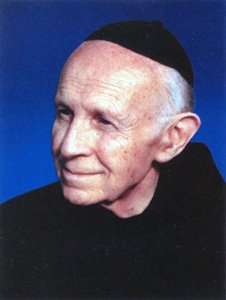 fter
World War II, Austria was divided between four countries: America,
France, the United Kingdom, and Russia. At the time, Russia was still
communist. The section of Austria controlled by the communists was the
richest, and included the city of Vienna. The Viennese were subject to
the all the atrocities and tyrannies of communism. However, in 1946, Fr.
Petrus Pavlicek, after making a pilgrimage to Mariazell, the principle
Marian shrine in Austria, was told by an interior voice: “Do as I say and there will be peace.”

 With
great clarity the Gospels show us how much our Divine Savior in His
mercy pities our pains of body and soul. We need only to recall the
awesome miracles He performed in His omnipotence in order to mitigate
these pains. But let us never make the mistake of imagining that this
combat against pain and sorrow was the greatest gift He dispensed to
mankind.